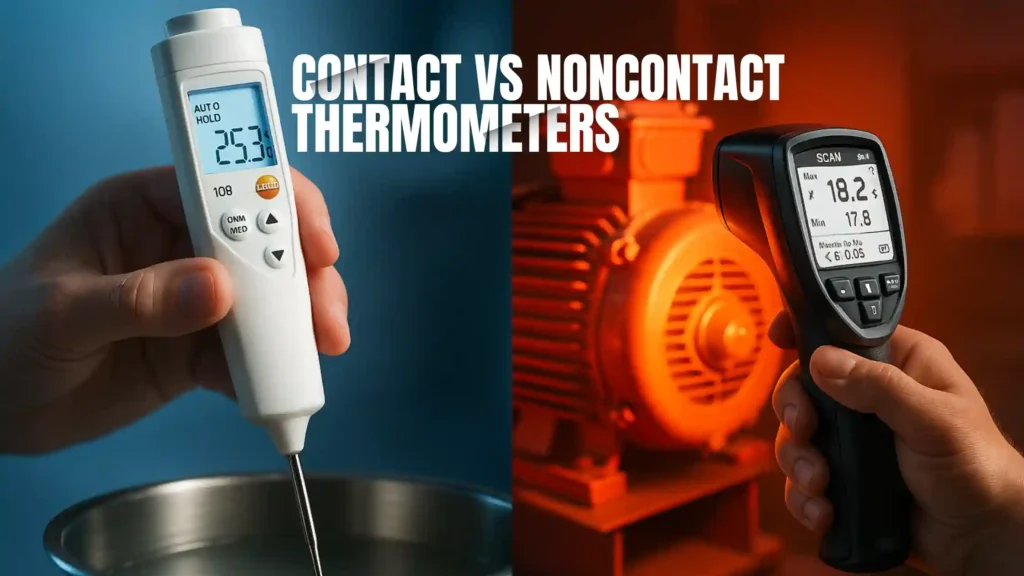
In modern automation and industrial environments, measuring temperature accurately without physical contact has become increasingly important. Whether it’s monitoring machinery, ensuring product quality, or maintaining safety standards, non-contact sensing technologies offer a reliable and efficient solution.
Unlike traditional sensors that require direct contact, advanced sensing devices can detect temperature from a distance. This capability is especially useful when dealing with moving objects, high temperatures, or sensitive materials where contact could cause damage or contamination.
What is an Infrared Sensor?
An infrared sensor is an electronic device that detects infrared radiation, which is a form of heat energy emitted by objects. Every object with a temperature above absolute zero naturally emits this radiation, even though it is invisible to the human eye.
These sensors capture that emitted energy and convert it into an electrical signal. This signal is then processed to determine the temperature of the object being measured. Because the process does not require physical contact, it is widely used in applications where traditional sensors are not practical.
How Infrared Sensing Works
The working principle of infrared sensing is based on detecting thermal radiation. When an object emits infrared energy, a lens within the sensor focuses that energy onto a detector, often called a thermopile.
The detector absorbs the radiation and converts it into an electrical signal. This signal is then processed and displayed as a temperature reading. The amount of infrared energy emitted by an object is directly related to its temperature, which allows the sensor to provide accurate measurements.
This method enables quick and efficient temperature measurement, even from a distance, making it ideal for industrial and commercial applications.
Key Advantages of Non-Contact Measurement
One of the biggest advantages of infrared sensing is its non-contact nature. This eliminates the need for physical interaction, making it suitable for measuring extremely hot, hazardous, or moving objects.
Another major benefit is speed. Infrared sensors can provide almost instant readings, allowing for real-time monitoring and quick decision-making. This is particularly useful in automated systems where delays can affect productivity.
Additionally, these sensors reduce wear and tear since there is no physical contact involved. This leads to longer operational life and lower maintenance requirements compared to traditional contact-based devices.
Types of Infrared Sensors
Infrared sensors are generally classified into two main types: active and passive. Active sensors emit infrared radiation and detect the reflection from objects, making them useful for proximity detection and obstacle sensing. Passive sensors, on the other hand, detect naturally emitted infrared radiation and are commonly used for temperature measurement and motion detection.
Each type serves different purposes depending on the application, but both rely on the same fundamental principle of detecting infrared energy.
Applications Across Industries
Infrared sensing technology is widely used across various industries due to its versatility and efficiency. In manufacturing, it helps monitor equipment temperature and detect overheating before it leads to failure. In automation systems, it is used for object detection, counting, and process control.
In healthcare, infrared devices are commonly used for quick and contactless temperature screening. This became especially important during global health situations where minimizing physical contact was essential.
Security systems also rely on infrared sensors for motion detection, helping to identify movement based on changes in heat patterns. Similarly, in consumer electronics, they are used in devices such as remote controls and smart home systems.
Factors to Consider When Choosing a Sensor
Selecting the right infrared sensing solution depends on several factors. Temperature range is one of the most important considerations, as different sensors are designed for different operating conditions.
Accuracy and calibration are also critical. Some sensors come pre-calibrated, while others may require manual adjustment depending on the application. Environmental conditions, such as dust, humidity, and ambient temperature, can also affect performance and should be taken into account.
Another key factor is the field of view. The sensor must be able to focus on the correct target area to ensure accurate readings. Choosing the right configuration helps improve measurement reliability and system efficiency.
For industrial applications requiring precise and reliable temperature monitoring, solutions like infrared sensor technology are widely used due to their ability to deliver fast and accurate results without physical contact.
Conclusion
Infrared sensing has transformed the way temperature is measured in modern systems. Its ability to detect heat from a distance makes it an essential tool in industries where safety, efficiency, and accuracy are critical.
By understanding how this technology works and where it can be applied, businesses can make informed decisions that improve operational performance and reduce risks. As technology continues to advance, infrared sensing will remain a key component in the evolution of automation and smart systems.