Rapid urine drug testing has quietly become a routine part of how small employers, sober living homes, probation programmes, and concerned families manage substance use risk. The shift has been driven by three things at once. Test cups have become more reliable, the substance landscape has grown more complex, and the cost per cup has dropped to the point where casual screening is genuinely affordable. The most interesting product in the category is no longer the entry-level five or ten panel. It is the 16 panel cup, which has settled in as the practical middle ground between basic screening and full clinical panels.
Why 16 panels and not 12 or 28
A standard 12 panel cup covers the classic substances most workplaces and treatment programmes worry about, including marijuana, cocaine, opiates, amphetamines, methamphetamine, benzodiazepines, methadone, barbiturates, oxycodone, MDMA, PCP, and one prescription category. It is a strong baseline, but it was designed for a substance landscape that has since broadened.
A 16 panel cup picks up where the 12 panel ends. Configurations vary by manufacturer, but typical additions cover buprenorphine, tramadol, ketamine, EtG (the ethyl glucuronide marker used to detect recent alcohol consumption), fentanyl, and other prescription or synthetic substances that have grown more relevant in recent years. The result is a single cup that addresses the realistic substance profile in most modern testing contexts without stepping up to a 24 or 28 panel kit, which tends to be priced for larger clinical operations.
For sober living homes, employee assistance programmes, and probation supervision in particular, the 16 panel is often the sweet spot. It catches the substances that matter for a relapse profile, including EtG for alcohol and buprenorphine for medication-assisted treatment monitoring, while staying inside the per-unit cost range that makes regular testing sustainable.
How a modern instant cup actually works
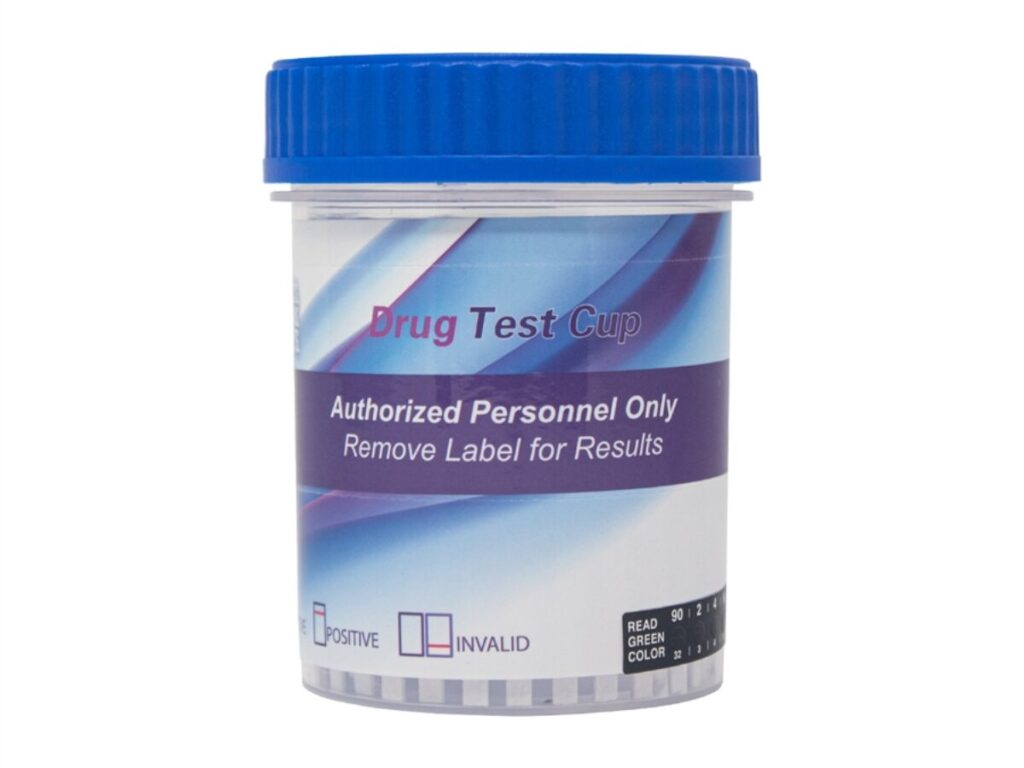
Modern cups are sealed all-in-one units. The donor provides the sample directly into the cup, integrated lateral flow assay strips inside the cup wall begin reacting immediately, and a control and test line on each strip indicates result within roughly five minutes. There is no transfer of urine between containers and no separate handling of strips.
Reliable cups also build in safeguards that older formats lacked. A temperature strip on the side of the cup flags whether the sample is at body temperature, which makes substitution with cold water or synthetic urine immediately visible. Adulterant strips check for things like creatinine, pH, oxidants, specific gravity, and sometimes nitrites, so the tester knows whether the sample itself has been tampered with before reading any drug result. CLIA-waived and FDA-cleared status on the kit is also worth confirming, since both indicate the cup is appropriate for use outside of a high-complexity laboratory. Specialist suppliers such as 12 Panel Now stock Drug Test Cups in 16 panel configurations with integrated temperature strips and adulterant detection built into the same single-use cup.
Where a 16 panel cup is the right call
There are four contexts where the 16 panel sits naturally.
Workplace screening for industries where alcohol, buprenorphine, or fentanyl exposure matters operationally, including transportation, manufacturing, construction, and healthcare-adjacent roles.
Sober living homes and outpatient recovery programmes that want EtG and medication-assisted treatment markers on top of standard substances.
Probation and parole supervision where the substance profile of the population includes synthetic opioids and prescription misuse, not only classic illicit drugs.
Family or household monitoring in coordination with a clinician, where the realistic substances of concern are broader than what a five or ten panel would catch.
For any of these uses, the 16 panel produces a fast preliminary read on site, and any non-negative result then routes to a certified laboratory for gas chromatography mass spectrometry or liquid chromatography mass spectrometry confirmation. Two-step testing is the standard recommended approach. The cup is the screen. The lab is the confirmation.
What to look for when buying
Buyers should look at four things. The actual list of substances detected, since 16 panel configurations vary, and the kit needs to match the risk profile being screened. The regulatory status, including CLIA waiver and FDA clearance documentation. The presence of integrated safeguards including temperature strip and adulterant detection. And the supplier’s track record on batch consistency, expiration dating, and chain of custody documentation for cases that may need to stand up to a workplace or legal review.
Frequently Asked Questions
What is a 16 panel drug test cup? A single-use urine drug test cup that screens for sixteen different drug classes or markers in one sample, usually expanding on a standard 12 panel by adding substances such as buprenorphine, tramadol, EtG, fentanyl, or ketamine.
How accurate are 16 panel cups? Reliable kits from established manufacturers report accuracy in the range of 99 percent for preliminary screening. Any non-negative result should be confirmed by a certified laboratory before any definitive conclusion is drawn.
Are 16 panel cups CLIA waived and FDA cleared? Reputable kits carry CLIA waiver and FDA clearance, which means they can be used outside a high-complexity laboratory in workplaces, treatment programmes, and household settings.
How long do results take? Most cups produce a readable result within three to five minutes after the sample is collected.
Do 16 panel cups detect alcohol? Many 16 panel configurations include EtG, which is the ethyl glucuronide marker used to detect recent alcohol consumption, often for up to 72 to 80 hours after drinking.
What is the difference between 12, 14, 16, and 28 panel cups? The number refers to how many drug classes or markers the cup screens for. Higher panel counts add substances like synthetic opioids, prescription medications, alcohol markers, and additional designer drugs.
What does the temperature strip do? It indicates whether the collected sample is within the normal human body temperature range, which is a fast indicator that the sample is fresh rather than substituted.
Can a 16 panel cup be used for legal or court-ordered testing? Instant cups can be used as the screening step in legally relevant testing, but any result used in a legal context should be confirmed by a certified laboratory under documented chain of custody.