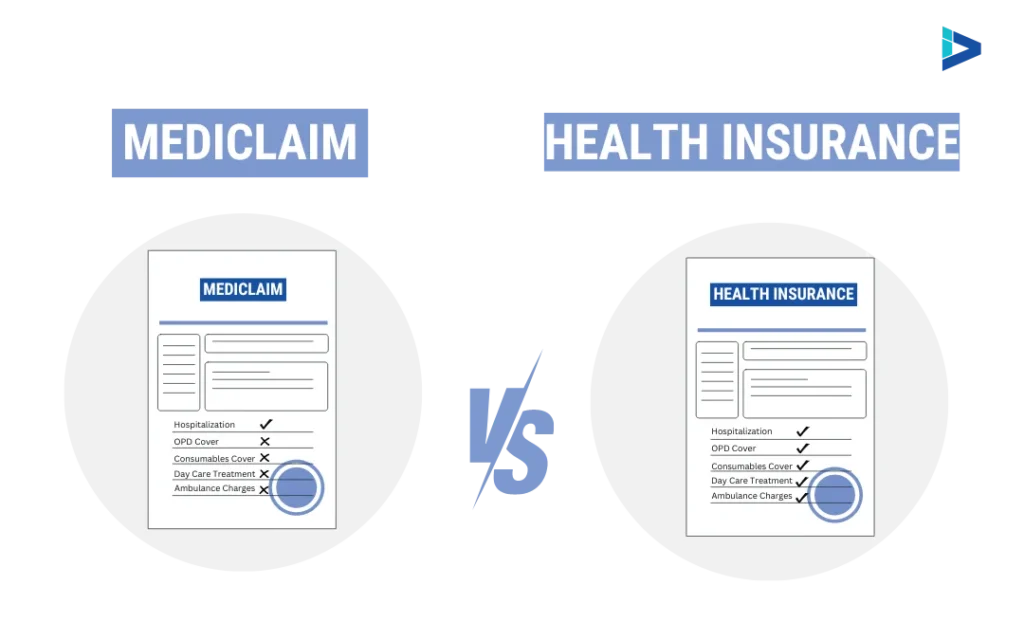
When you start looking for medical cover, two terms often appear: mediclaim policy and health insurance plan. Because both relate to healthcare expenses, many assume they refer to the same type of coverage.
However, they are not exactly the same. Each covers medical expenses in a different way and may include different types of benefits. Knowing the difference can help you better understand your options and what each policy actually covers.
What is a Mediclaim Policy?
A mediclaim policy mainly focuses on hospitalisation expenses and covers medical costs that arise when you are admitted to a hospital for treatment.
Usually, the coverage includes expenses related to treatment during hospital admission, such as:
- Hospital room charges
- Doctor consultation during hospitalisation
- Diagnostic tests required for treatment
- Medicines and medical procedures during admission
Mediclaim policies generally work by reimbursing eligible medical expenses or settling them directly with the hospital. The coverage can become applicable only when hospitalisation is required for a specified period, depending on the policy’s conditions.
What are Health Insurance Plans?
Health insurance plans usually provide broader coverage than a basic mediclaim policy. These plans may include hospitalisation expenses as well as certain medical costs that occur before or after treatment.
Depending on the policy chosen, coverage may include:
- In-patient hospitalisation expenses
- Medical costs before hospital admission
- Treatment expenses after discharge
- Day-care procedures that do not require a 24-hour stay in a hospital
- Preventive health check-ups in certain situations
These features help address different stages of medical treatment, from diagnosis to recovery.
How Do Mediclaim Policies and Health Insurance Plans Differ?
Both policies help address medical expenses, but their coverage scope may vary. The table below explains the general differences:
| Feature | Mediclaim Policy | Health Insurance Policy |
| Primary focus | Specifically covers expenses while you are admitted | Can include expenses from diagnosis to recovery |
| Coverage scope | Usually limited to a specific sum for managing an illness | Can offer higher sum insured options and cover serious illnesses |
| Pre/Post hospitalisation | Focuses on the hospital stay | Can cover diagnostic tests before and medicines/physiotherapy after discharge |
| Day-care and OPD | Usually requires a 24-hour stay to trigger a claim | Can cover quick surgeries (cataracts, dialysis) that do not need an overnight stay |
What Should You Check Before Choosing a Policy?
Before selecting any medical coverage, it is important to look closely at a few key details in the policy. This will give you a clearer idea of how the coverage may work when you are required to undergo treatment.
Some important points to consider include:
- Coverage scope and inclusions: Check what types of medical expenses the policy covers, such as hospitalisation, tests, or certain procedures.
- Waiting periods for certain illnesses: Many policies have waiting periods before coverage becomes applicable for specific conditions.
- Network hospital availability: Look at the list of hospitals where cashless treatment may be available under the policy.
- Coverage limits and sub-limits: Some policies may place limits on specific expenses, such as room rent or certain treatments.
- Policy renewal conditions: Check how the policy renewal works and whether there are any conditions mentioned in the policy wording.
Taking the time to review these details can help you understand how the policy may apply at different stages of medical treatment and hospital care.
Conclusion
Both mediclaim and health insurance policies help manage medical expenses, especially when hospital treatment is needed. However, the type of coverage they offer can differ. A mediclaim policy usually focuses on hospitalisation costs. In contrast, health insurance plans may also include certain expenses that arise before or after hospital treatment.
Recognising this difference can make it easier to see what type of coverage each policy offers and what kind of medical expenses it may address.