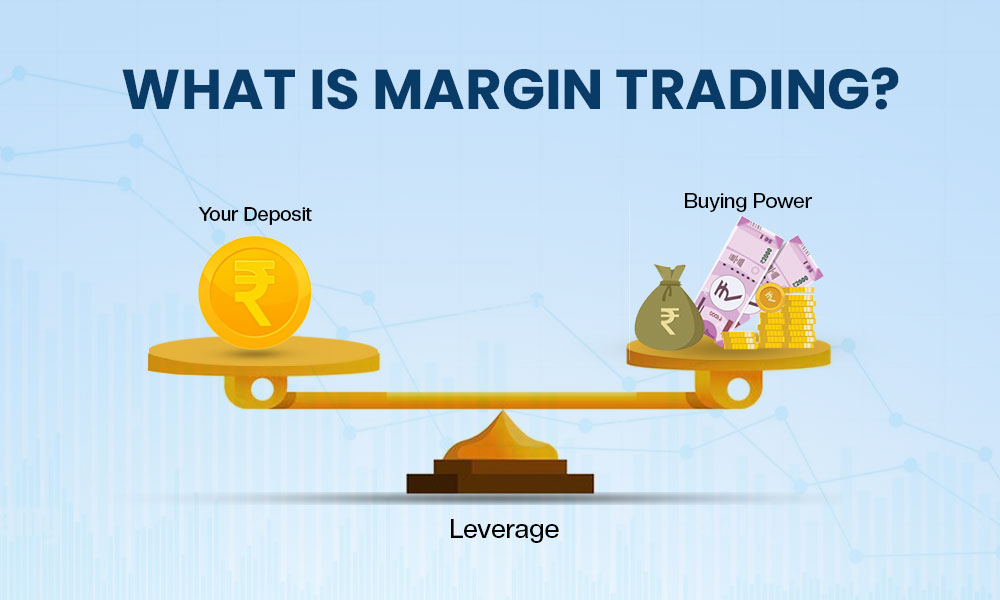
Stock markets offer multiple ways to participate, and one of the most popular among active traders is the margin trading facility.
It allows you to buy more shares than your available cash balance by borrowing funds from your broker. While this can increase potential returns, it also increases risk.
Before you start using margin, here’s what you should clearly understand.
What Is a Margin Trading Facility?
The margin trading facility allows traders to purchase stocks by paying only a portion of the total trade value upfront. The broker funds the remaining amount, and you pay interest on the borrowed portion.
Say, you intend to purchase shares priced at 100,000 rupees, and your broker asks you for a 20% margin, you would just have to bring in 20,000 rupees as your own capital. The remaining is funded by the broker.
This renders margin trading appealing, particularly in the markets that are moving in one direction with strong momentum.
How Margin Trading Works in Practice
Suppose you are monitoring the Hyundai share price and you are of the opinion that the company’s share price will increase in the short run and you wish to buy a large position. You purchase the shares with part cash and the rest via the margin facility.
When the stock appreciates, your profits are increased since you would have been trading a bigger portion with less investment.
But when the stock goes down, then your losses are increased as well. This is what most new traders fail to realise.
Key Risks You Must Understand
Using margin can boost your buying power, but it also increases your exposure to losses if the market moves against you.
1. Amplified Losses
Profits may go up, but losses may go up exponentially. When trading on margin, any slight decrease in price will greatly decrease your capital.
When the stock plunges, you can lose what you have invested first before the anticipated time.
2. Margin Calls
The broker can make a margin call in case the value of your position starts to decline past a given threshold. This requires that you will need to add extra funds or securities to keep the required margin.
Otherwise, the broker has the right to sell off your position against your knowledge in order to get the money back on the loan. This usually occurs during volatile market periods.
3. Interest Costs
The money borrowed is not free. Brokers are charging interest on the amount funded. Interest payments can decrease your net returns in case you occupy positions longer.
It is due to this that margin trading can be more adequately applied in short-term strategies, but not in long-term investing.
4. Market Volatility
Stocks can rise or fall drastically because of the earnings announcements, policy alterations, world news or industry news. Even the fundamentally strong stocks may fall off temporarily.
Margin in volatile markets must be managed with great risk and discipline.
The Importance of Risk Management
In case you want to use the margin trading system, these are some of the simple risk management rules:
Use Stop-Loss Orders: You must always predefine your exit point. This minimises bad risk and capital insurance.
Avoid Over-Leveraging: The amount you can afford to buy does not mean that you should buy it. Keep leverage moderate.
Diversify Positions: Avoid putting your entire margin exposure into one single stock.
Monitor Daily: Margin positions should be actively monitored. Prices can change quickly.
Final Thoughts
The margin trading facility is a tool of might when it is applied in the right direction. It provides the prospect of increasing purchasing strength, and returns may be boosted.
Leverage should be treated as a strategic tool, not a shortcut to quick profits.
Used responsibly, it can support trading strategies. Used carelessly, it can significantly impact capital.