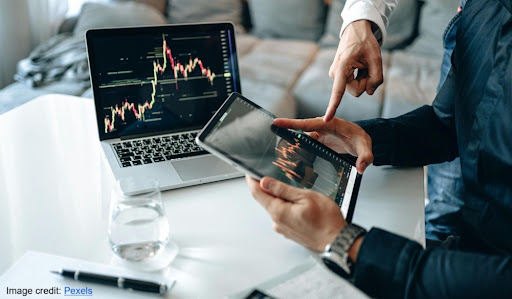
Currency exchange is an essential component of the worldwide financial system. The foreign exchange market, or Forex market, is where currency transactions happen. Forex trading is to buy and sell currencies to profit from the foreign exchange rate. Today the Forex market is the largest financial market in the world, with far more daily trading activity than other markets, such as stocks.
Forex trading provides Indian investors looking to venture outside of equities a way to stay connected to the economic climate and conditions of the world through foreign currency exchange. Exchange rates fluctuate based on various macroeconomic indicators, including inflation, interest rates, foreign trade, and political decisions.
Although investors tend to look for potential investments based on the current stock market value when considering buying shares in an IPO in 2026, there are other segments in the financial markets apart from stocks driven mainly by macroeconomic indicators.
What is forex trading?
Forex trading involves exchanging one currency for another in the global currency market. Currencies are traded in pairs because the value of one currency is always measured relative to another.
Common currency pairs include:
- USD/INR – US Dollar against Indian Rupee
- EUR/USD – Euro against US Dollar
- GBP/USD – British Pound against US Dollar
- USD/JPY – US Dollar against Japanese Yen
When traders participate in forex markets, they attempt to anticipate whether the base currency in a pair will strengthen or weaken relative to the quoted currency.
For example, if a trader expects the US Dollar to appreciate against the Indian Rupee, they may take a position in the USD/INR currency pair.
Currency markets operate through a network of banks, financial institutions, and trading platforms across different financial centres worldwide.
Structure of the forex market
The foreign exchange market differs from traditional stock exchanges because it does not operate through a single centralised exchange.
Decentralised global network
Forex transactions occur through a global network of banks, financial institutions, and electronic trading platforms.
Continuous trading hours
The forex market operates twenty-four hours a day across major financial centres such as London, New York, Tokyo, and Singapore.
High liquidity
The currency market is extremely liquid due to the large volume of international trade and financial transactions.
Macroeconomic influence
Exchange rates respond strongly to economic indicators such as interest rates, inflation, and global trade activity.
These characteristics make forex trading fundamentally different from equity trading.
How forex trading works in India
In India, forex trading operates under a regulated framework to ensure transparency and investor protection.
Currency derivatives trading
Indian investors primarily participate in currency markets through currency derivatives traded on recognised stock exchanges.
Currency pairs available for trading
Currency derivatives contracts involving the Indian Rupee include:
- USD/INR
- EUR/INR
- GBP/INR
- JPY/INR
Regulatory authorities
Currency trading in India is regulated by:
- Securities and Exchange Board of India (SEBI)
- Reserve Bank of India (RBI)
Trading through brokerage platforms
Investors access currency trading through brokerage accounts that connect to stock exchanges offering currency derivatives.
This regulatory structure ensures that forex trading activities remain transparent and compliant with financial regulations.
Major participants in the forex market
The foreign exchange market includes several participants that contribute to currency liquidity and price discovery.
Central banks
Central banks influence exchange rates through monetary policy decisions and currency market interventions.
Commercial banks
Banks conduct currency transactions for international trade, cross-border investments, and financial settlements.
Institutional investors
Hedge funds and asset management firms participate in forex markets for portfolio diversification.
Retail traders
Individual investors increasingly participate through online trading platforms offering currency derivative products.
These participants collectively drive global currency market activity.
Factors influencing currency prices
Several macroeconomic factors influence currency exchange rates in the forex market.
Interest rate movements
Central bank interest rate decisions affect the attractiveness of a country’s currency.
Inflation levels
High inflation can reduce purchasing power and weaken a currency.
Economic growth
Strong economic performance generally strengthens a nation’s currency.
Political and geopolitical developments
Political stability and international relations influence investor confidence in a currency.
Trade balance
Countries with strong export performance often experience higher demand for their currency.
Traders analyse these factors to understand potential currency movements.
Common forex trading strategies
Beginners in forex trading often start with simple strategies that focus on identifying trends and price movements.
Trend trading
This strategy involves identifying the overall direction of currency movement and trading in alignment with that trend.
Range trading
Range trading focuses on identifying price levels where currencies repeatedly move between support and resistance zones.
Breakout trading
Breakout strategies attempt to capture price movements when a currency pair moves beyond a defined trading range.
News-based trading
Currency markets often respond quickly to economic announcements such as interest rate decisions or employment data.
These strategies rely on technical analysis and macroeconomic awareness.
Risks associated with forex trading
Although forex markets offer opportunities, they also involve several risks that traders must consider.
High volatility
Currency prices can fluctuate rapidly due to economic announcements and geopolitical developments.
Leverage risk
Forex trading often involves leveraged positions, which can magnify both gains and losses.
Global market sensitivity
Currency values react to international economic developments that may be difficult to predict.
Complex macroeconomic analysis
Understanding global financial indicators requires continuous monitoring of economic data.
Because of these factors, beginners should approach forex trading cautiously.
Forex trading versus stock market investing
Forex trading differs significantly from equity market investing.
Market focus
Stock markets focus on company performance, while forex markets focus on currency exchange rates.
Influencing variables
Stock prices depend on corporate earnings and sector performance, whereas currency values depend on macroeconomic indicators.
Trading opportunities
Equity investors may focus on long-term growth or opportunities such as an upcoming IPO 2026, while forex traders typically focus on short-term currency movements.
Risk profile
Currency markets often involve higher leverage and faster price movements compared with equities.
Understanding these differences helps investors select markets aligned with their financial objectives.
Tips for beginners entering forex trading
Individuals exploring forex trading should adopt a disciplined approach.
Study economic indicators
Understanding inflation, interest rates, and GDP growth helps interpret currency movements.
Begin with limited exposure
Beginners should start with small trade sizes while gaining experience.
Use risk management tools
Stop-loss orders help limit potential losses during volatile market conditions.
Monitor global developments
Currency markets respond quickly to international economic news.
These practices help traders manage risks while learning how currency markets function.
Conclusion
Forex trading provides access to the global currency market and allows traders to participate in exchange rate movements between major currencies. For Indian investors, understanding the regulatory framework, market structure, and macroeconomic drivers of currency prices is essential before entering the forex market.
While many investors focus on equity opportunities such as an upcoming IPO 2026, the forex market offers a different trading environment driven by global economic forces. With proper knowledge, disciplined risk management, and continuous learning, beginners can gradually develop the skills required to navigate the currency markets responsibly.